

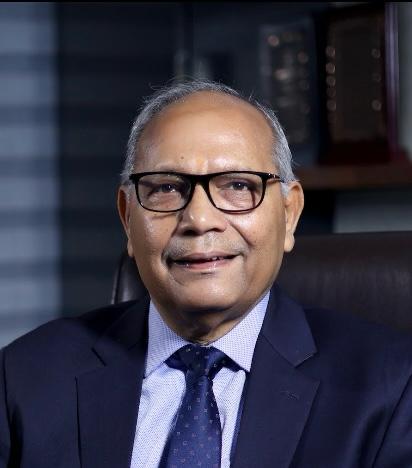
Footwear Design & Development Institute (FDDI) is an institution that has earned national and global recognition as a Centre of excellence in education, skilling, research and consultancy for the footwear, leather, fashion and allied sectors. I feel privileged to perform the functions of Chairman of the Footwear Design & Development Institute.
I am an alumnus of Harcourt Butler Technological University, Kanpur, with a degree in Chemical Engineering, and have receive specialized training in Leather Manufacturing at the Central Leather Research Institute (CLRI), Chennai. Over the past four decades, I have had the privilege of working across technology, manufacturing and exports in the leather and footwear sector, and of learning from the many practitioners who have shaped its growth in India. My professional journey—including opportunities to support process modernization, adopt more environmentally responsible systems, and build AFPL Global Pvt. Ltd. into a footwear manufacturing and export enterprise—has reinforced my belief that skilled people, continuous technology upgradation, uncompromising quality and sustainability are essential for long-term, resilient growth.
FDDI plays a strategic role in advancing the priorities of the Government of India—particularly those led by the Department for Promotion of Industry and Internal Trade (DPIIT)—by enabling industry-aligned skilling, design innovation, technology upgradation and applied research. The Institute’s focused engagement with MSMEs, start-ups and large enterprises strengthens domestic manufacturing capabilities and enhances India’s export competitiveness in global markets.
Drawing upon my long-standing association with FDDI and the Council for Leather Exports (CLE), I firmly believe that closer collaboration between academia, industry and government is essential to meet evolving skill needs and global market expectations. In the years ahead, we will place renewed emphasis on demand-driven skilling, practical and application-oriented learning, entrepreneurship development, and deeper engagement with MSME clusters and export-oriented units.
Sustainability and responsible manufacturing will remain integral to FDDI’s approach, with continued focus on eco-friendly materials, effective effluent management, circular economy practices, and compliance with international environmental and social standards—enabling Indian industry to compete responsibly and credibly within global value chains.
I look forward to working closely with the Governing Council, the Institute’s Management, faculty, students, alumni, industry bodies and government stakeholders to further strengthen FDDI’s role as a national knowledge partner and skill hub. Together, we will continue to empower future-ready professionals, support industry growth, boost exports, and contribute meaningfully to the vision of Atmanirbhar Bharat and Viksit Bharat @2047.
Expand