

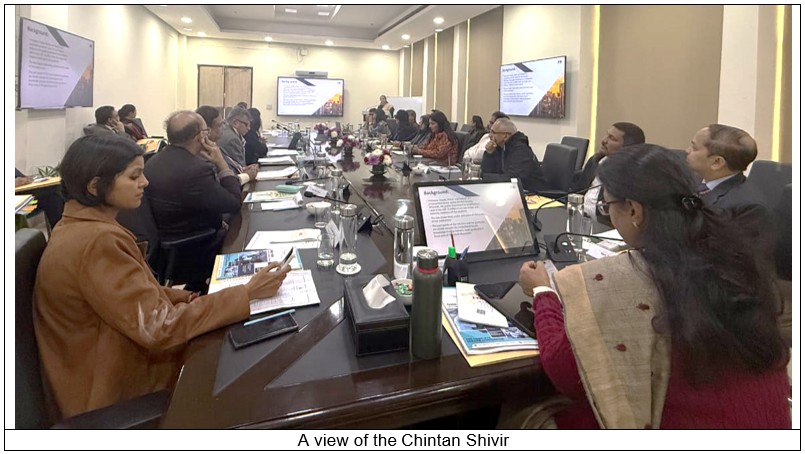
DPIIT–FDDI Chintan Shivir was organised on 22nd December 2025 at the FDDI Noida Head Office on the theme “Strengthening Skilling, Innovation, Standards and Ecosystem for the Footwear & Leather Sector.” The deliberations focused on achieving strategic alignment among policy frameworks, industry requirements, and academic institutions to strengthen skill development, innovation, quality standards, regulatory compliance, and global competitiveness across the footwear, leather, fashion, and allied sectors.
The programme also included a guided campus visit, offering participants a first-hand perspective on FDDI’s integrated skilling, design, research, and testing ecosystem. The visit showcased state-of-the-art laboratories, Centres of Excellence, design studios, advanced manufacturing facilities, and NABL-accredited testing infrastructure, underscoring FDDI’s role in supporting industry-ready skilling, compliance preparedness, applied research, and innovation-led education.
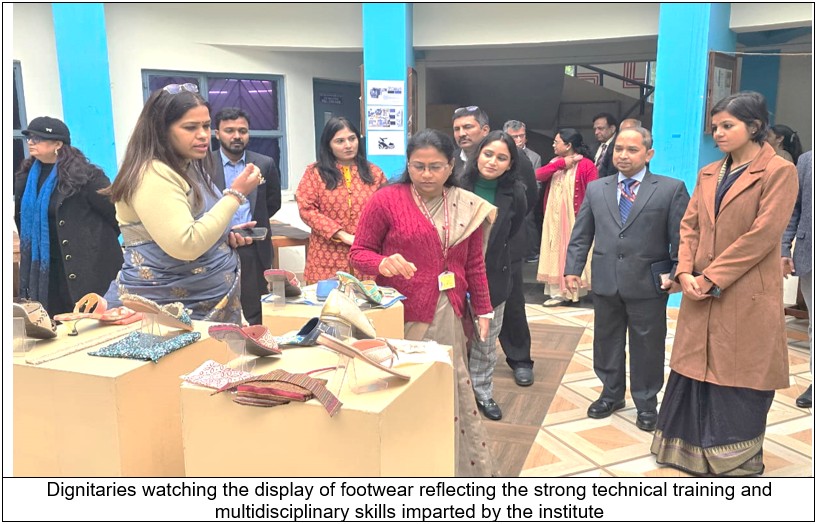
The campus interaction reinforced the discussions held during the Chintan Shivir by demonstrating how policy intent, academic delivery, and industry application converge at FDDI to build a future-ready and globally competitive footwear and leather ecosystem.
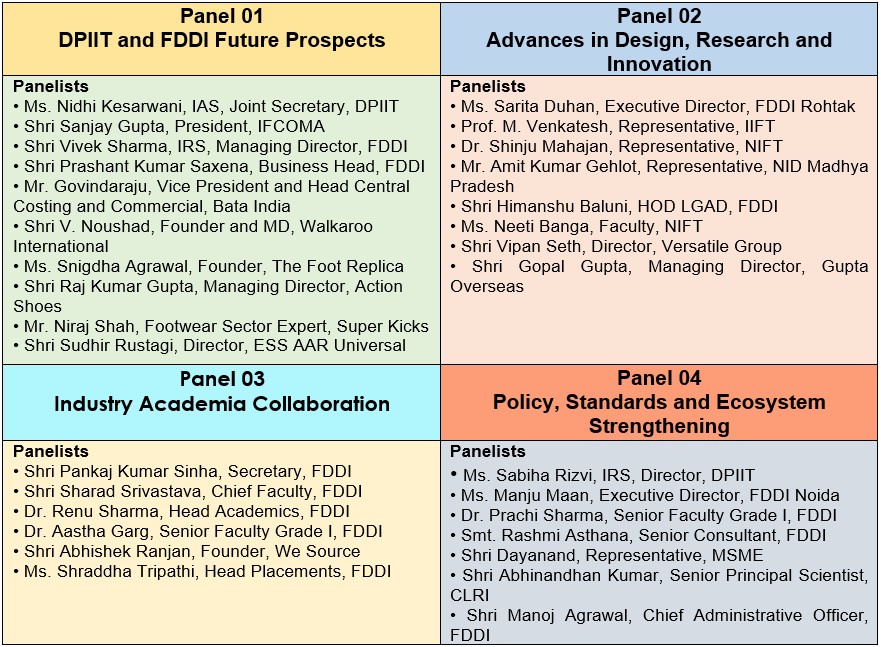
Four thematic panel discussions were held during the Chintan Shivir, namely Panel 1: DPIIT–FDDI Future Prospects, Panel 2: Advances in Design, Research and Innovation, Panel 3: Industry–Academia Collaboration, and Panel 4: Policy, Standards and Ecosystem Strengthening, facilitating focused deliberations on the strategic priorities and future growth of the footwear and leather sector.
The Keynote Address by Ms. Nidhi Kesarwani, IAS, Joint Secretary, Department for Promotion of Industry and Internal Trade (DPIIT), set the tone for structured consultations among industry, academia, and allied institutions.
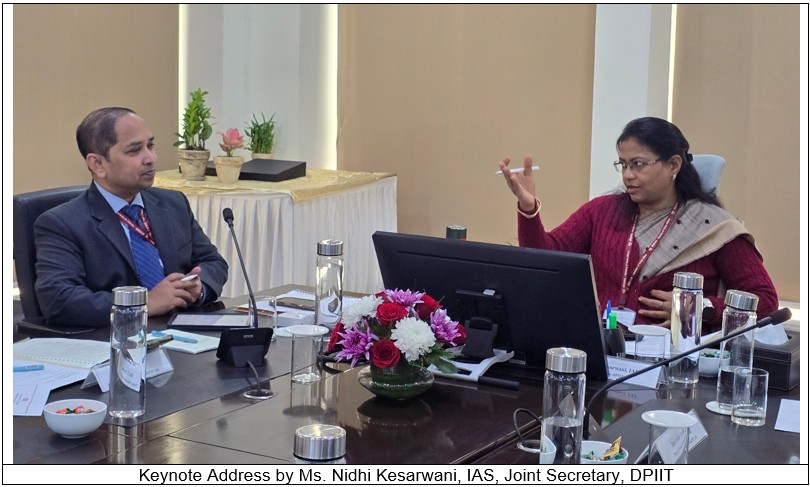
She emphasized a forward-looking roadmap for the footwear and leather ecosystem, highlighting the critical role of skill development, strengthening design capabilities, effective translation of research into industry practice, and alignment with standards and compliance frameworks.
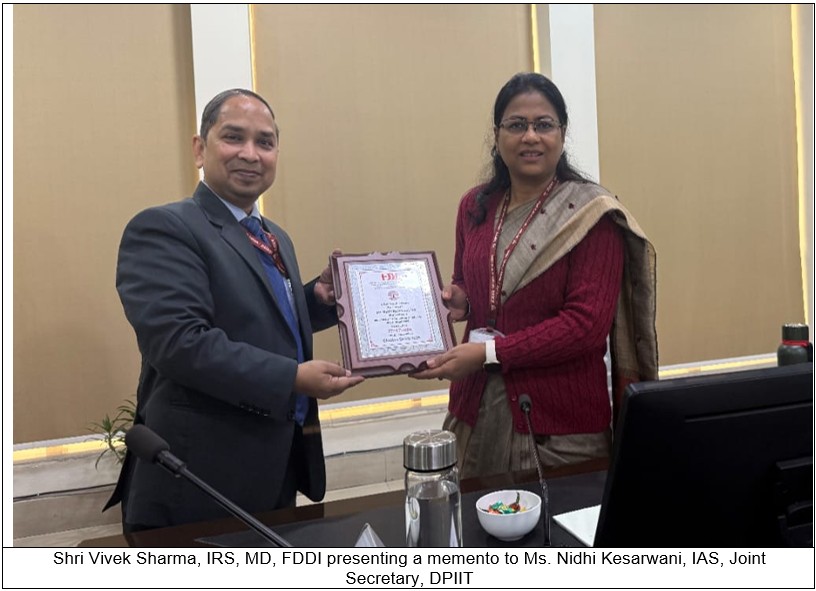
The Institutional Presentation by Shri Vivek Sharma, IRS, Managing Director (MD), FDDI provided an overview of FDDI’s national footprint, institutional strengths, and sectoral capabilities, and articulated Vision 2030 – “Empowering Today, Transforming Tomorrow” as a strategic roadmap to position FDDI as a global benchmark institution in footwear, leather goods, fashion, retail, and allied sectors. He highlighted FDDI’s pan-India presence with a common curriculum and uniform quality benchmarks, supported by a strong alumni network actively contributing to the industry.
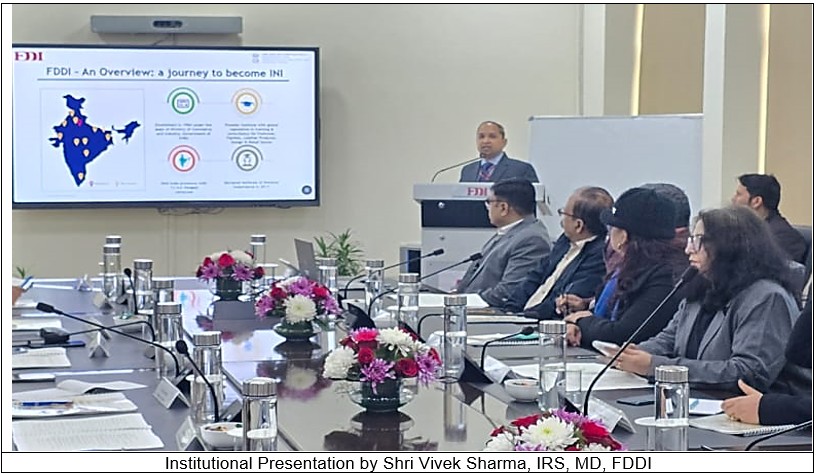
The presentation also underscored FDDI’s Centres of Excellence and advanced testing infrastructure, which enhance quality assurance and compliance readiness, including NABL-accredited laboratories and international testing capabilities with SATRA-accredited test methods. Further, key institutional reforms aligned with Vision 2030 were outlined, covering academic strengthening, introduction of new course baskets, policy and governance enhancement, CSR registration, and the rollout of a unified ‘ONE FDDI’ service compendium to deliver integrated and responsive industry support.
The agenda for Panel 1 – DPIIT and FDDI: Future Prospects focused on developing a National Footwear Skilling and Growth Framework, facilitating the transition from academia-led to industry-led skilling, and strengthening international collaborations for upskilling. Key deliberations included the creation of an Industry–Academia Integration Framework, implementation of live industry projects, establishment of a dedicated Industry–Academia Coordination Cell, and undertaking a National Industry Skill Requirement Study. The panel also discussed manufacturing-driven curriculum revisions, cluster-based short-term programs, industry-driven design studios, faculty capability enhancement, infrastructure and laboratory upgradation, and the signing of strategic MoUs with leading footwear organizations.
The agenda for Panel 2 – Advances in Design, Research and Innovation emphasized institutional academic collaborations, industry-aligned curriculum planning, and the strengthening of PhD and applied research. Discussions also covered collaborative research and innovation programs, along with the integration of advanced materials, comfort science, and emerging technologies into education and product development.
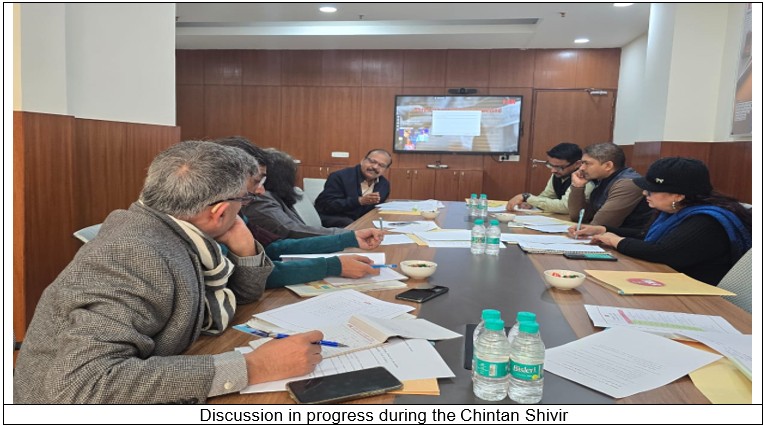
The agenda for Panel 3 – Industry–Academia Collaboration focused on mechanisms for systematic collection of industry problem statements, industry co-supervision of student projects with a standardized project lifecycle, optimal utilization of under-used infrastructure, and the strategic deployment of CSR funds to support skilling, innovation, and collaborative initiatives.
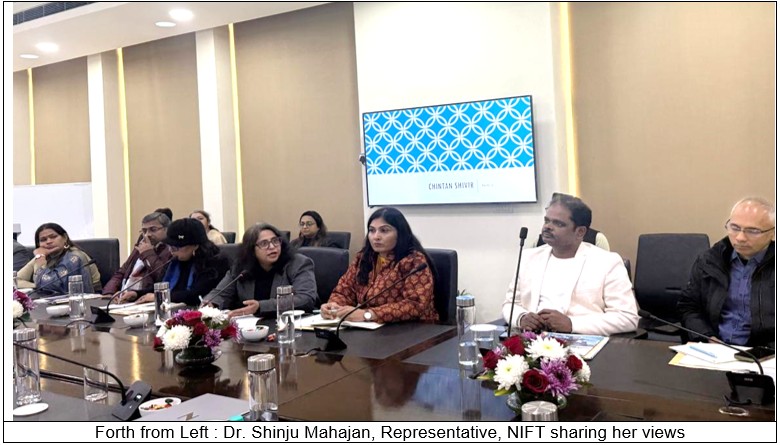
The agenda for Panel 4 – Policy, Standards and Ecosystem Strengthening addressed the development of a standards and compliance roadmap, policy alignment and ecosystem coordination, and standards development for vegan and alternate leather materials. The panel also deliberated on positioning FDDI as a national knowledge and standards hub, while enhancing export competitiveness and ease of compliance for the footwear and leather sector.
The deliberations clearly mapped existing gaps, emerging opportunities, and priority action areas spanning education delivery, deeper industry integration, compliance preparedness, and institutional capacity enhancement across the footwear and leather value chain.
The panels strongly emphasized a shift towards industry-led and demand-driven skilling models, supported by modular and flexible training programs, structured MoUs and joint ventures, and student-led research and innovation aligned with real-world industry challenges. Focus was also placed on the optimal and shared utilization of FDDI’s infrastructure, strategic leveraging of CSR resources, strengthening standards, testing, and compliance ecosystems, and the systematic adoption of digital and AI-enabled tools to future-proof skilling and innovation. A consistent call emerged for time-bound implementation, clearly defined ownership, and measurable, outcome-oriented deliverables to translate deliberations into tangible impact.
The DPIIT–FDDI Chintan Shivir 2025 enabled focused, solution-oriented deliberations among industry, academia, and allied institutions on key themes of skilling, innovation, industry collaboration, and standards and compliance. The discussions have been consolidated into panel-wise recommendations, a clearly defined implementation architecture, and an indicative action matrix to guide systematic follow-up and execution.
Building on these outcomes, dedicated Working Groups have been constituted as a concluding step to ensure effective implementation. Each Working Group has been assigned specific action areas emerging from the panel deliberations and will develop detailed action plans, clearly define roles and responsibilities, and execute the tasks within agreed, time-bound timelines ranging from one to six months, depending on the nature of the agenda. A proposed Joint Steering Group, supported by the Working Groups, will oversee time-bound follow-up, including the submission of DPRs/concept notes and periodic progress reporting for DPIIT’s consideration, ensuring that the outcomes translate into measurable and sustainable impact for the footwear and leather sector.