

Ms. Archana Prasad, Senior Faculty Grade II, School of Fashion Design (FD), FDDI Hyderabad, has made noteworthy contributions to the fields of sustainable fashion, pattern making, traditional textiles, and fashion education through her research publications and academic writings. Her work reflects a strong commitment to sustainability, cultural preservation, and the integration of traditional knowledge with contemporary fashion practices.
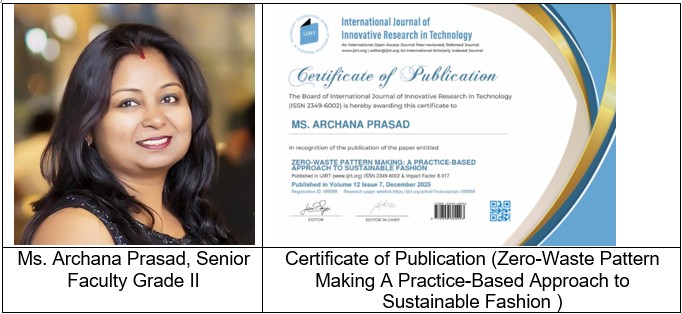
Her research paper, “Zero-Waste Pattern Making: A Practice-Based Approach to Sustainable Fashion,” published in the International Journal of Innovative Research in Technology (IJIRT) in December 2025, explores innovative pattern-making techniques that minimize textile waste while maintaining aesthetics, fit, and functionality. The study highlights zero-waste pattern making as an effective approach for sustainable fashion education and responsible garment production.
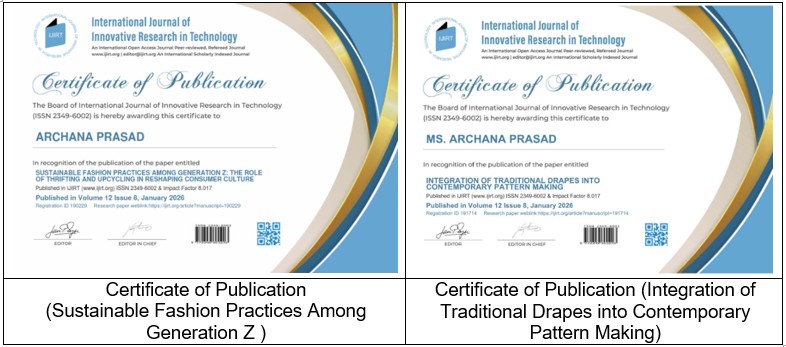
In another publication, “Sustainable Fashion Practices Among Generation Z: The Role of Thrifting and Upcycling in Reshaping Consumer Culture,” Ms. Prasad examines how thrifting, upcycling, and conscious consumer choices are driving the transition towards circular fashion and environmentally responsible lifestyles. The research offers valuable insights into evolving consumer behaviour and the future of sustainable fashion.
Further reinforcing the link between heritage and innovation, her paper “Integration of Traditional Drapes into Contemporary Pattern Making” explores the adaptation of Indian draping traditions such as sarees, dupattas, dhotis, and regional wraps into modern pattern-making methods. The study demonstrates how traditional knowledge can inspire innovation, sustainability, efficient fabric utilization, and culturally responsive design solutions.
Adding to her academic accomplishments, Ms. Archana authored a book chapter titled “Costume Culture of Bihar — From Ancient to Modern”, published in PARIDHAN: Special Issue – Costumes: Ancient to Modern (2025–26). The chapter traces the evolution of Bihar's textile and costume heritage, highlighting the role of indigenous craftsmanship, regional identity, and socio-cultural influences while examining the impact of modernization on traditional costume practices.
These scholarly contributions underscore FDDI's commitment to research excellence, sustainable development, cultural preservation, and innovation-driven fashion education.