


Dr. Rambabu Muppidi, Senior Faculty Member, School of Fashion Design (FD), FDDI Chennai, has achieved a significant milestone by securing three Indian Design Patents for innovative product designs that blend contemporary design thinking with traditional Indian craft knowledge.
The patents, granted by the Controller General of Patents, Designs and Trade Marks, reflect his continued commitment to design innovation, research, intellectual property development, and the preservation of India's rich artisan heritage.
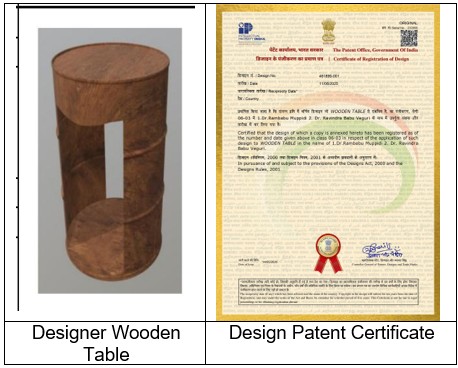
The first patented design, “Designer Wooden Table” (Application No. 461895-001), developed jointly with Dr. Ravindra Babu Veguri of GITAM University, showcases a unique fusion of traditional craftsmanship and modern furniture aesthetics. The design emphasizes functionality, visual appeal, and contemporary lifestyle requirements while demonstrating the value of interdisciplinary design research.
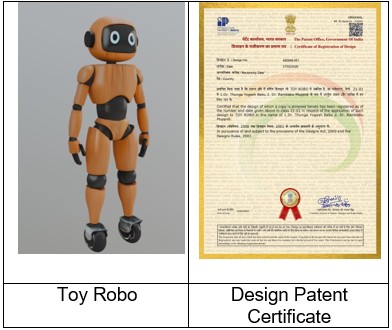
The second patent, “Toy Robo” (Application No. 492950-001), developed in collaboration with Dr. Yogesh Babu, is an interactive educational toy designed to promote creativity, analytical thinking, problem-solving, and activity-based learning among children. Inspired by the traditional Kondapalli and Etikoppaka toy-making traditions of Andhra Pradesh and Telangana, the project successfully integrates indigenous craft knowledge with contemporary educational product design.
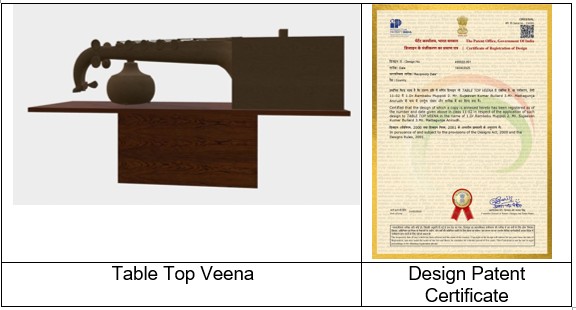
The third patented design, “Table Top Veena” (Application No. 455522-001), was inspired by extensive field research on the traditional Nuziveedu Veena craft heritage of Andhra Pradesh. Developed in collaboration with Mr. Sujeevan Kumar Bullard and Mr. Mattagunja Anirudh, the design reinterprets a culturally significant musical instrument into a contemporary decorative product while preserving its artistic and cultural essence.
Belonging to an artisan family from Andhra Pradesh, Dr. Muppidi has consistently worked towards preserving traditional and endangered art forms through design innovation, research, documentation, and intellectual property creation.
His work aligns with the vision of promoting craft-based innovation, artisan empowerment, and sustainable design practices while encouraging students and young designers to engage in original product development and research.
These achievements underscore FDDI’s growing contribution to design research, innovation, and intellectual property creation, while reinforcing its commitment to preserving India’s traditional crafts through contemporary design interventions.